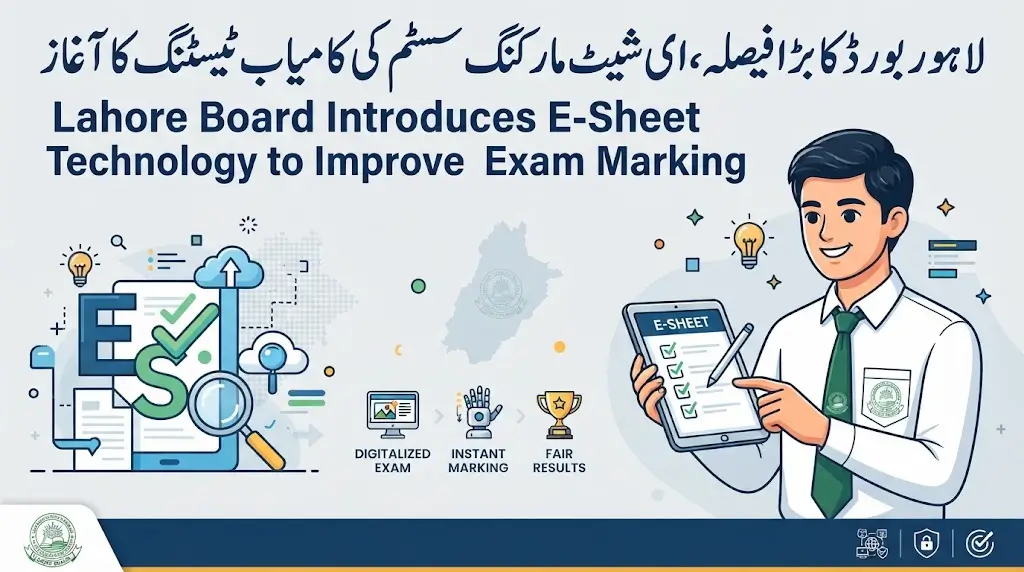
Lahore Board Introduces E-Sheet Technology to Improve Exam Marking
The Board of Intermediate and Secondary Education (BISE) Lahore has started testing a new e-sheet marking system as part of a pilot project aimed at modernizing the examination process. The initiative introduces on-screen marking of answer sheets and could bring significant changes to the way examination papers are checked in the future.
The pilot project began with a mock examination involving 150 students from Government College University (GCU), Punjab College and Superior College. The students appeared in the test using specially designed e-sheets, allowing the board to examine how the new digital marking process works in a real examination environment.
BISE Lahore Begins E-Sheet Pilot Project
The BISE Lahore e-sheet marking system is being tested before any wider implementation. The pilot phase will help officials identify technical issues, evaluate the marking process and assess how students and teachers respond to the new system.
During the first day of testing, 150 students participated in the examination. Their papers were prepared for digital evaluation rather than relying entirely on the conventional manual checking method.
The move reflects the growing use of technology in education and examination systems. If the pilot proves successful, the system could eventually be expanded to more examinations.
Read More: GC University Hyderabad Admissions 2027 Open With Scholarships
Officials Review the New Examination System
Chairman of the Task Force on Examinations Muzammil Mahmood visited the examination arrangements during the pilot project. He reviewed the process alongside BISE Lahore Chairman Professor Badar-ul-Islam and Controller of Examinations Tauseef-ur-Rehman.
The officials observed how students used the e-sheets and reviewed the arrangements for the digital marking process. Their assessment is expected to help the board improve the system before considering further implementation.
According to the officials, the e-marking system could make examinations more secure and organized. It is also intended to improve confidence among students by making the checking process more systematic.
How E-Sheet Marking Could Change Paper Checking
One of the major features of the BISE Lahore e-sheet marking system is the possibility of checking answer scripts through an on-screen platform.
Under the proposed system, qualified teachers would be authorized to mark examination papers digitally. This could allow examiners to participate from different locations instead of requiring all answer scripts to be physically transported to traditional marking centres.
The system may also make it easier to assign papers to teachers according to their qualifications and subject expertise. Officials said that expert teachers from different parts of Pakistan could potentially participate in the marking process.
| Feature | Expected Role in the New System |
|---|---|
| E-Sheets | Students’ answers are prepared for digital evaluation |
| On-Screen Marking | Teachers check papers through a digital platform |
| Qualified Examiners | Only authorized and qualified teachers can mark papers |
| Wider Examiner Pool | Teachers from different parts of Pakistan may participate |
| Examination Security | Digital records can help strengthen monitoring |
| Rechecking Complaints | A structured digital process may reduce marking-related complaints |
Focus on Examination Security
Another important objective of the e-sheet marking system is improving examination security. Muzammil Mahmood said the use of e-sheets could help strengthen students’ confidence in the examination process.
The system could also support the identification of impersonation cases. Digital examination records can provide additional information for monitoring and verification, although the effectiveness of these measures will depend on how the technology is implemented.
For students, the main benefit could be a more organized examination process. However, the pilot stage is important because it allows officials to identify practical problems before introducing the system on a larger scale.
Qualified Teachers to Mark Examination Papers
Professor Badar-ul-Islam said teachers with the required qualifications would be authorized to check examination papers under the new arrangement.
The proposed system could also make it possible for expert teachers from across Pakistan to participate in marking. This may provide examination boards with access to a broader pool of subject specialists.
Digital marking can also help standardize the checking process by providing examiners with a controlled platform. The board can potentially monitor marking activity and maintain digital records of evaluated papers.
Possible Reduction in Rechecking Complaints
Controller of Examinations Tauseef-ur-Rehman said the introduction of e-marking could significantly reduce complaints related to the rechecking of examination papers.
A digital marking system may make it easier to maintain records of marks awarded by examiners. It could also support greater transparency when a student’s paper needs to be reviewed.
However, the current project remains a pilot test. The board will need to evaluate the results of the mock examinations before deciding how and when the system should be expanded.
What Students Should Know
Students should understand that the current testing phase does not automatically mean that all future BISE Lahore examinations will immediately move to digital marking.
The first phase is being used to test the technology, examination arrangements and marking procedures. Further decisions are expected after officials assess the performance of the pilot project.
For now, students should continue preparing for examinations according to the official schedules, syllabi and instructions issued by BISE Lahore.
Read More: 1st Year Subject Wise Marks List for Students in 2026
A Step Toward Digital Examination Management
The BISE Lahore e-sheet marking system represents a move toward greater digitalization of examination management. The pilot involving 150 students will provide officials with practical experience before any broader rollout.
If the system performs effectively, it could change how examination papers are checked, how examiners are selected and how marking records are maintained. It could also provide a more structured way to address concerns about paper checking and rechecking.
For students and teachers, the success of the project will depend on reliable technology, proper examiner training, strong data security and clear examination procedures. The pilot phase will therefore be important in determining whether digital marking can become a regular part of the board’s examination system.